The coastline around Inverloch, Venus Bay and Anderson Inlet is a beautiful and dynamic part of Victoria. Wind, waves, tides and storm events move sand along the coast and reshape the shoreline over time. In recent years, these processes have contributed to increased erosion at Inverloch, putting important places, environmental values and infrastructure at risk.
Between 2020 and 2025, the Cape to cape resilience project improved our understanding of these changes and informed a long-term plan for managing them.
We are now putting this plan into action through dune reconstruction and beach nourishment works at Inverloch Surf Beach.
Explore our work to date and what’s coming next below.
Latest news
70,000 m3 of sand dredged at Inverloch
Works at Inverloch Surf Beach continue to progress well, with beach renourishment now underway in front of the surf club.
A recent survey shows approximately 70,000 m3 of sand has been dredged onto the beach ready to be shaped in line with the project design.
As part of a dynamic coastal environment, some sand movement and loss over time is expected. Planned revegetation will help stabilise key areas and support the long-term effectiveness of the reconstructed dune.
For your safety, please continue to stay outside the flagged-off areas.
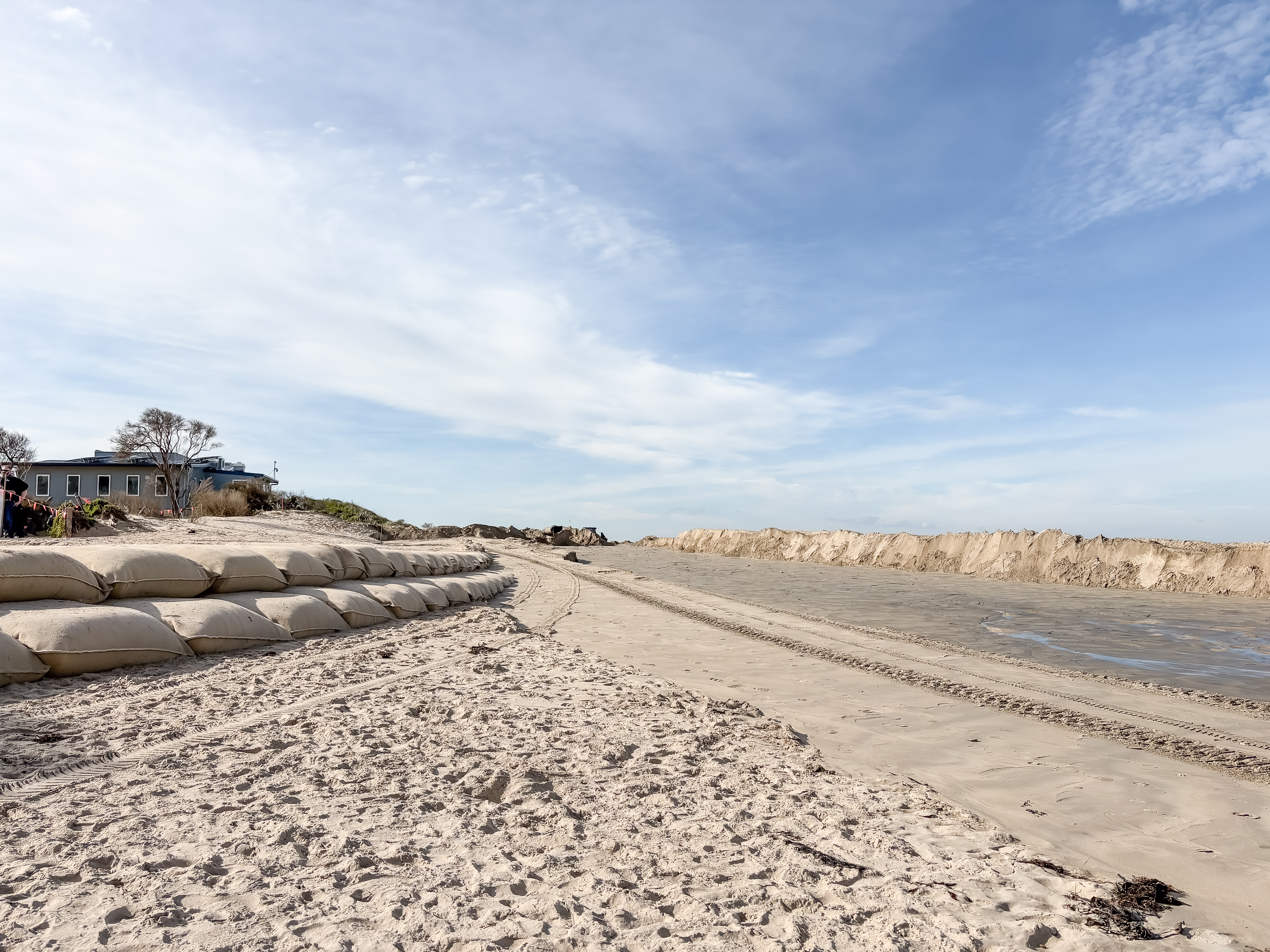
Images: Dredged sand at Inverloch Surf Beach on July 21, 2026 (DEECA, 2026)
Dune reconstruction and beach nourishment works
From February to July 2026, we are delivering the Inverloch dune reconstruction and beach nourishment works.
This large-scale, engineered restoration project will rebuild important sections of the lost sand dunes, helping to support long‑term beach access from both the Surf Life Saving Club building and Surf Parade.
These major on‑ground works form the first step in a broader sequence of adaptation actions designed to protect Inverloch’s coastline and uphold the environmental and community values identified in the cape to cape resilience plan.
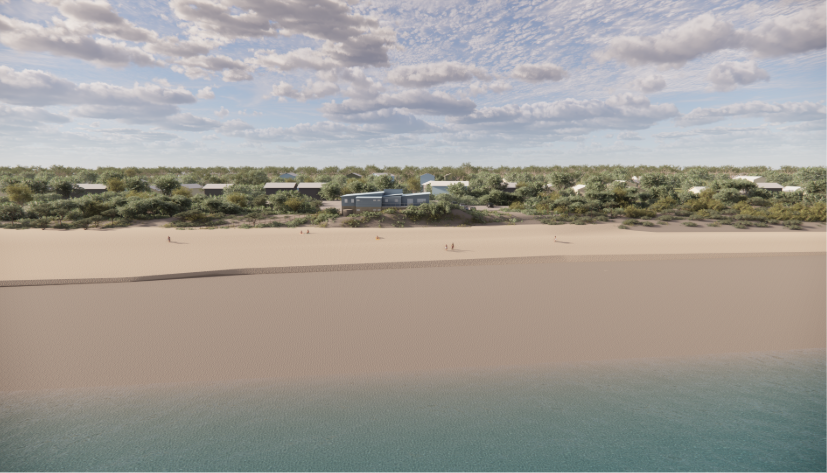
Image: Render image of the Inverloch dune reconstruction and beach nourishment works (Water Technology, 2025)
For details about the design, you can review the FAQs from our October 2025 online information session (PDF) (Word) or check out this presentation from Water Technology
For details about how the construction will work, check out the FAQs from our January 2026 online information session.
Part 1 Issued February 2026 (PDF) (Word) and Part 2 Issued March 2026 (PDF) (Word)
Cape to cape resilience project 2021-2025
From 2021 to 2025, the Cape to cape resilience project brought together research, scientific modelling, and community input to better understand coastal hazards and their impacts across the region. This work informed the development of the Cape to cape resilience plan, created in partnership with agencies, stakeholders and the community. The plan provides a roadmap to strengthen coastal resilience and adapt to future challenges, outlining key risks, community values, and a strategic approach to adaptation. It was finalised in December 2025 following community feedback and endorsement by the Inverloch Regional and Strategic Partnership.
As part of the Cape to cape resilience project, we worked with the community to understand coastal values, risks and aspirations for the future. This input helped shape the adaptation pathways and actions in the resilience plan. We thank the community and stakeholders for their valuable contributions throughout the project.
Cape to Cape resilience plan 2025 (PDF, 11.6 MB)
Cape to Cape resilience plan 2025 - accessible (DOCX, 24.0 MB)
The Inverloch Region Coastal Hazard Assessment (CHA) is a core technical investigation undertaken in the cape to cape resilience project. Informed by extensive analyses of the region's geological formation, local conditions, and historical and recent changes along the Cape to Cape coastline, the project team developed various computer models to simulate conditions of the local coastal, estuarine and catchment areas.
These models assessed:
- storm-tide
- waves
- sediment transport
- shoreline response (erosion/accretion).
The models have been used to examine how the coastline might change and respond by looking at both present day conditions and predicted future changes, such as rising sea levels and changing wind and wave climates.
This assessment's outcomes help us better understand some of the complex processes impacting our coastline and surrounding areas. As a result, we can now identify areas and assets that may be vulnerable to coastal hazards and changing climate conditions. This knowledge helps to inform the development of possible management or adaptation responses.
For more information about the CHA, check out these two presentations:
- Understanding the Coastal Hazard Assessment - a summary of the methods, modelling and key outcomes
- A strategic approach to adaptation - how the project team uses the outcomes to strategically plan our approach for managing coastal areas in the region.
Hazard maps
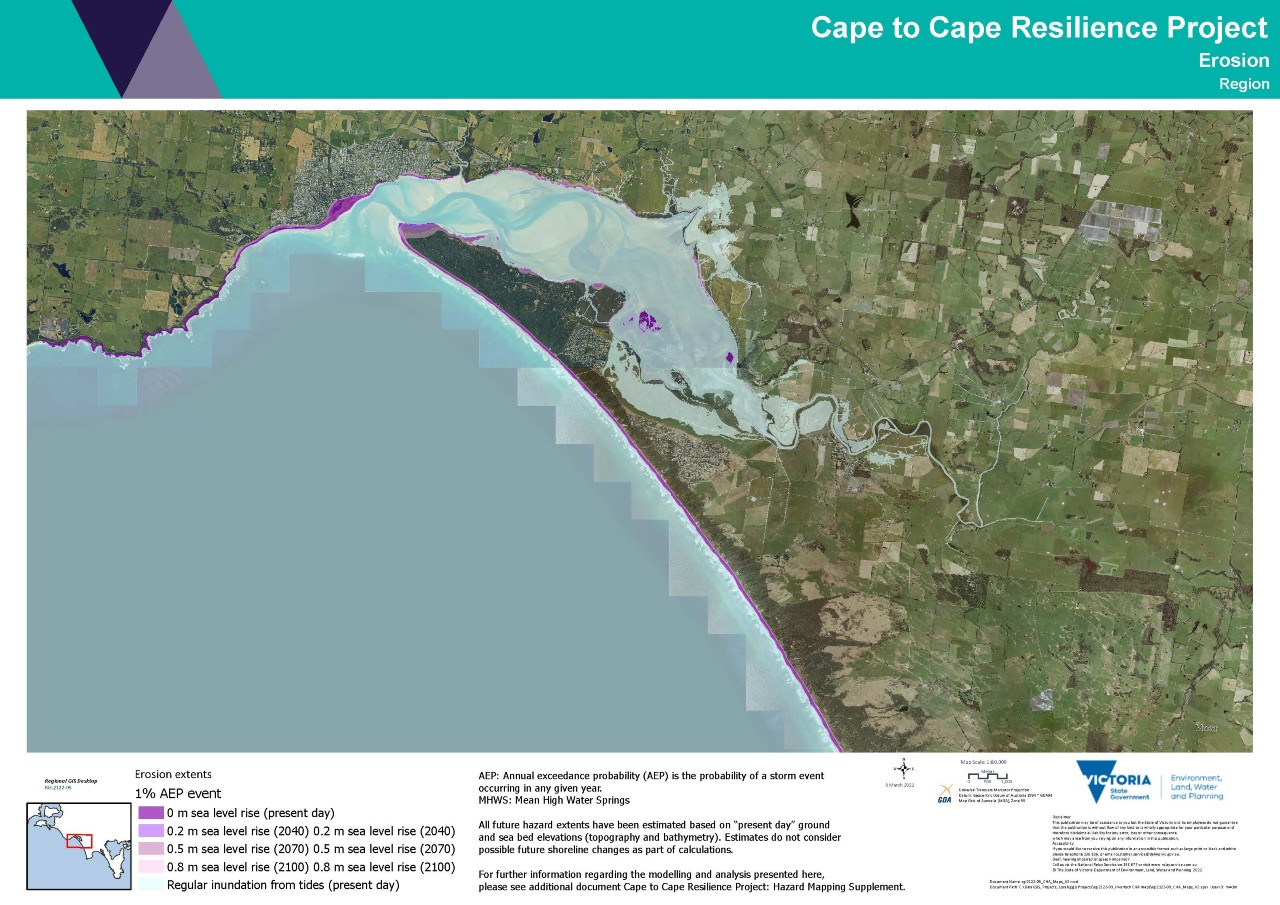
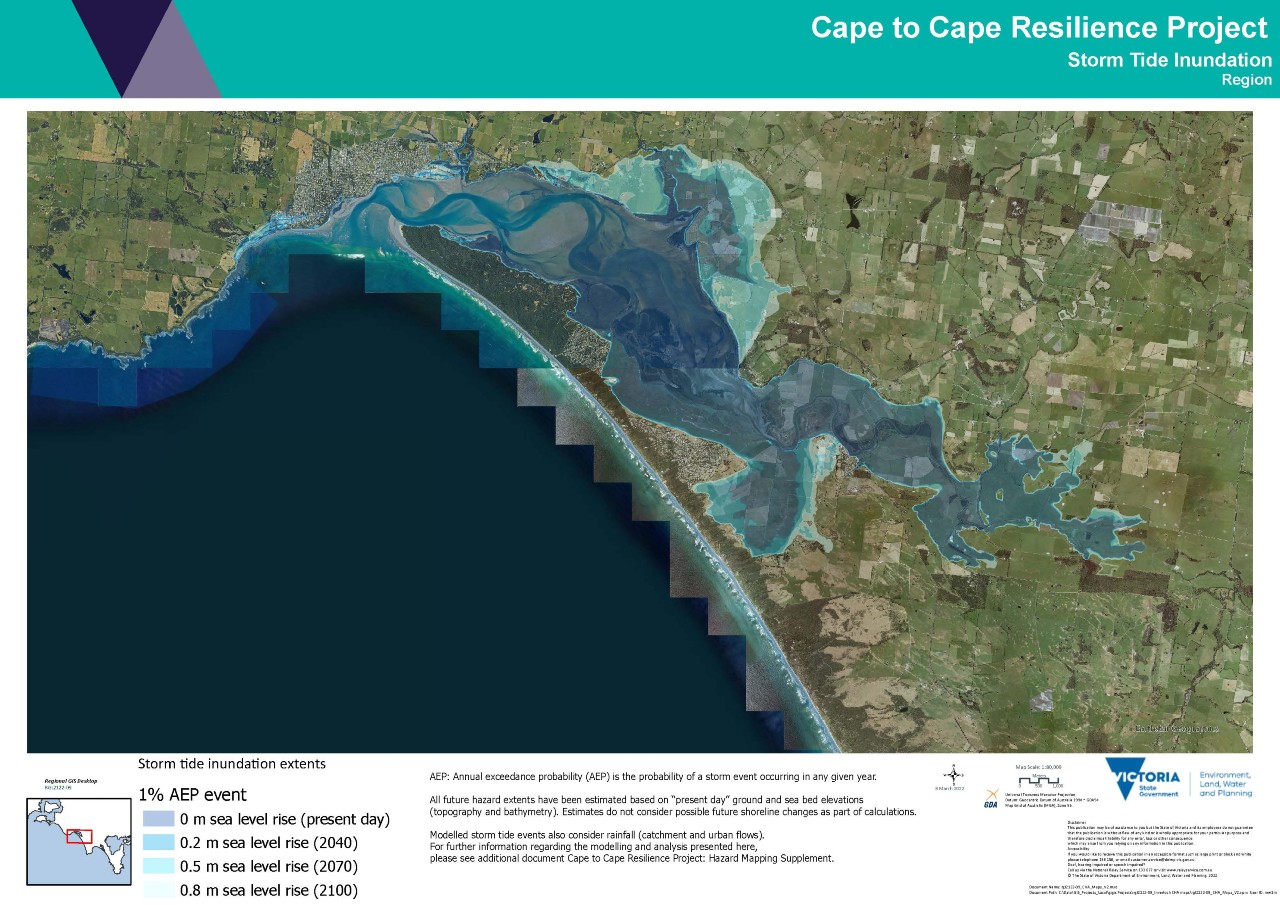
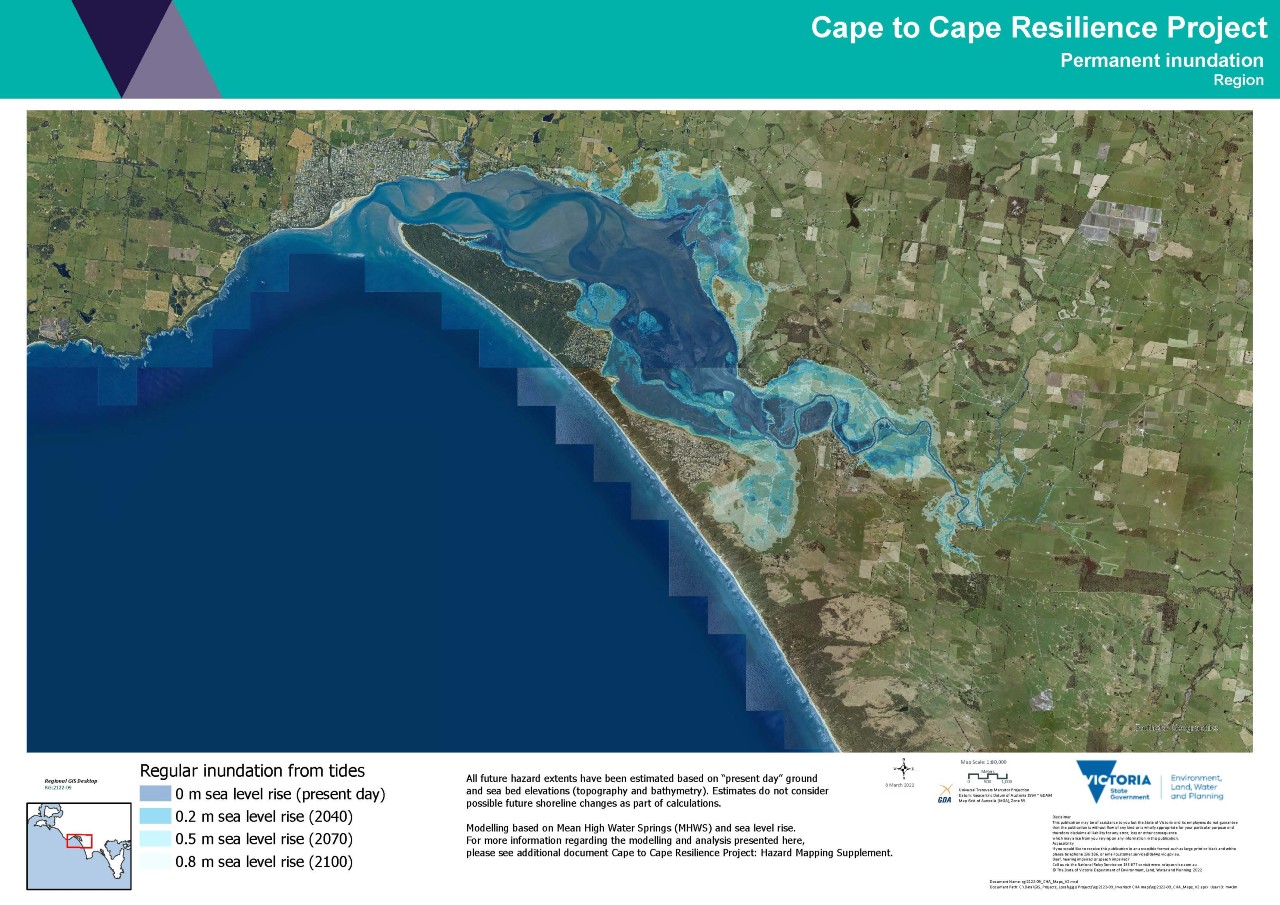
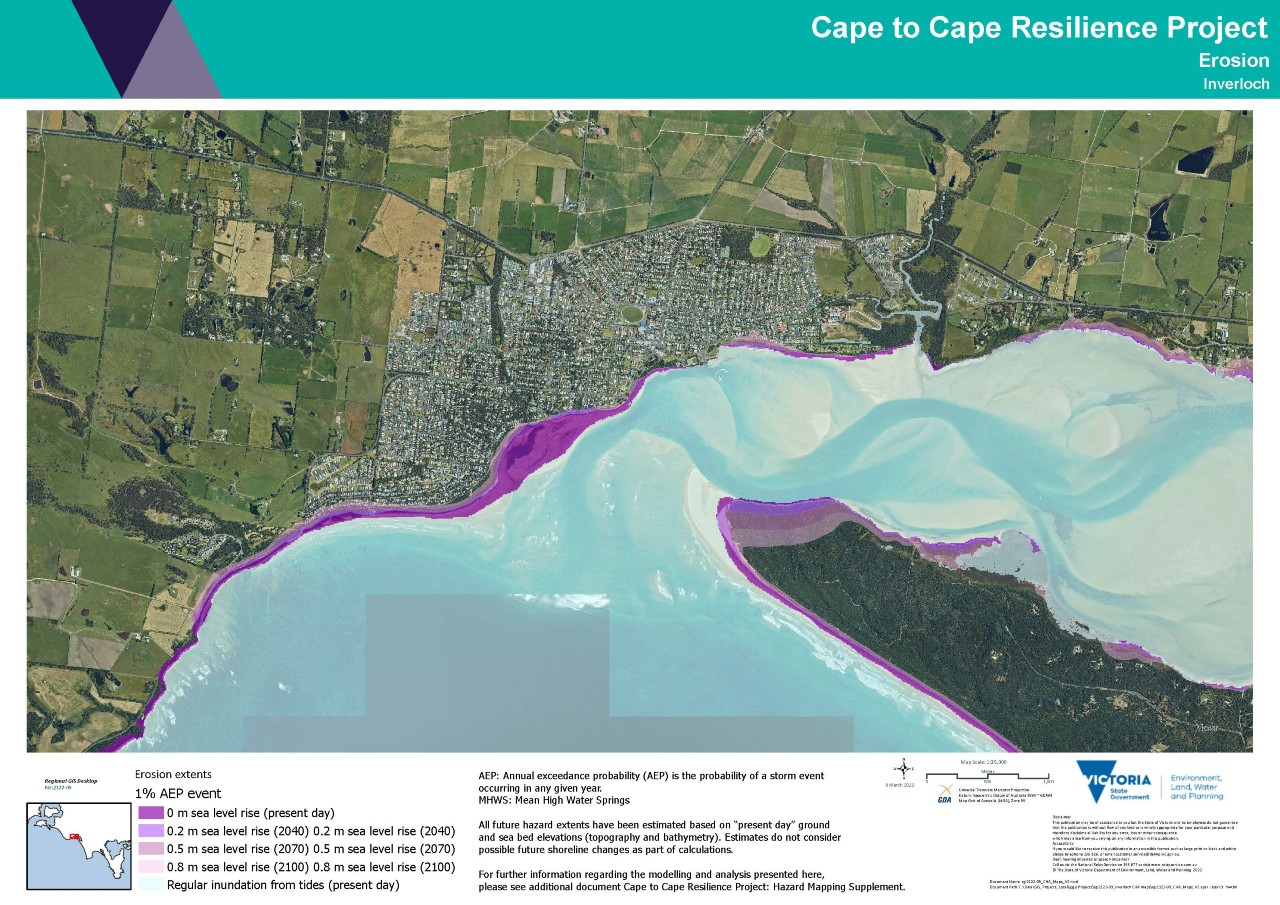
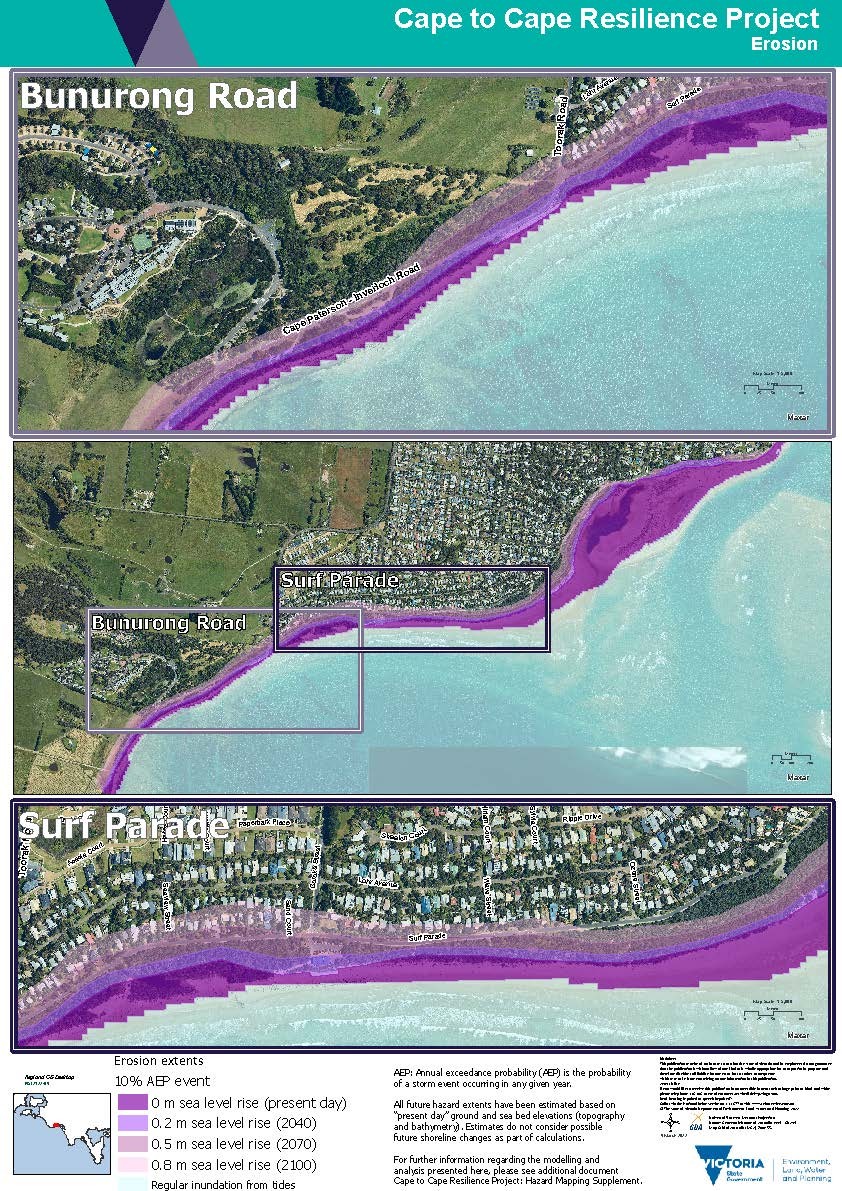
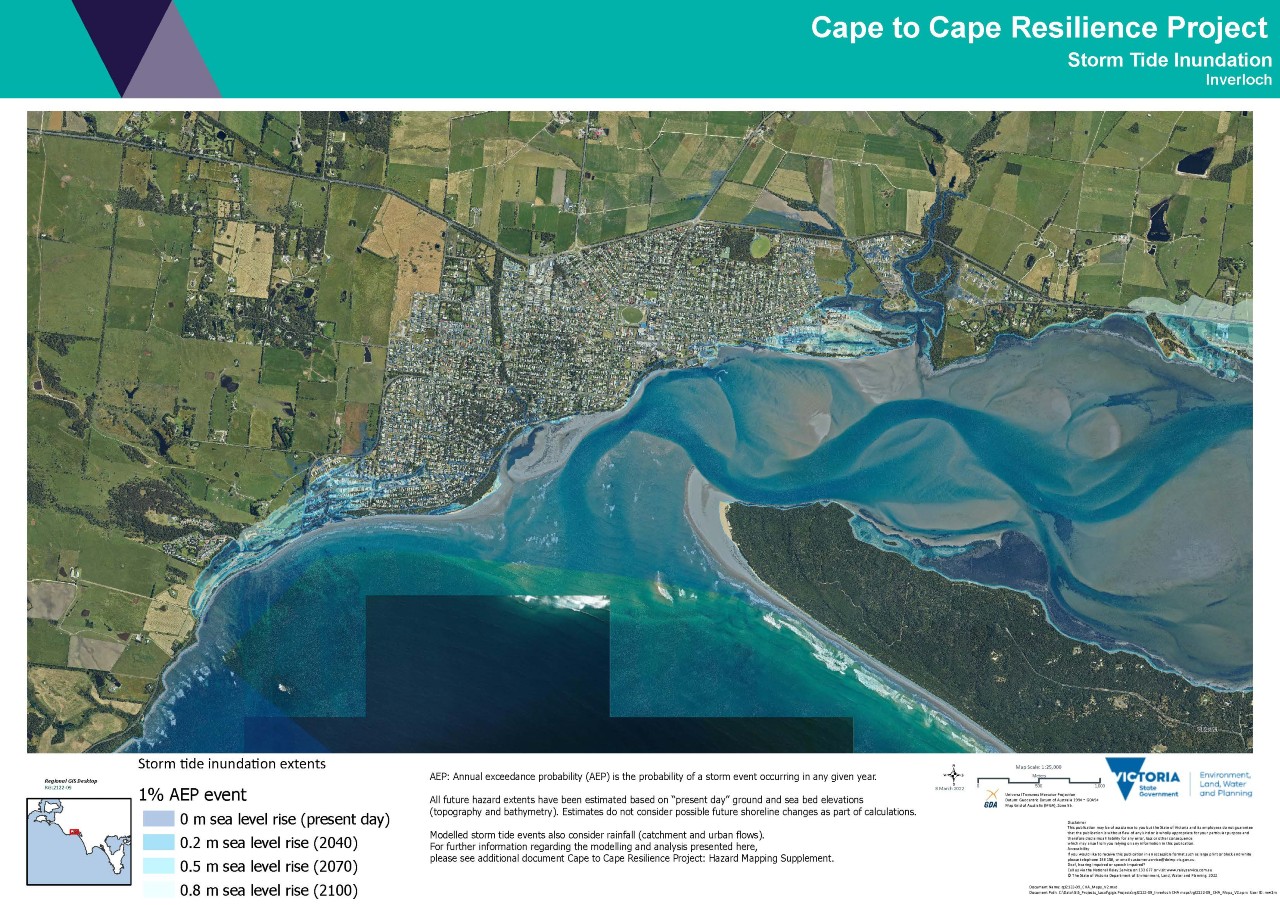
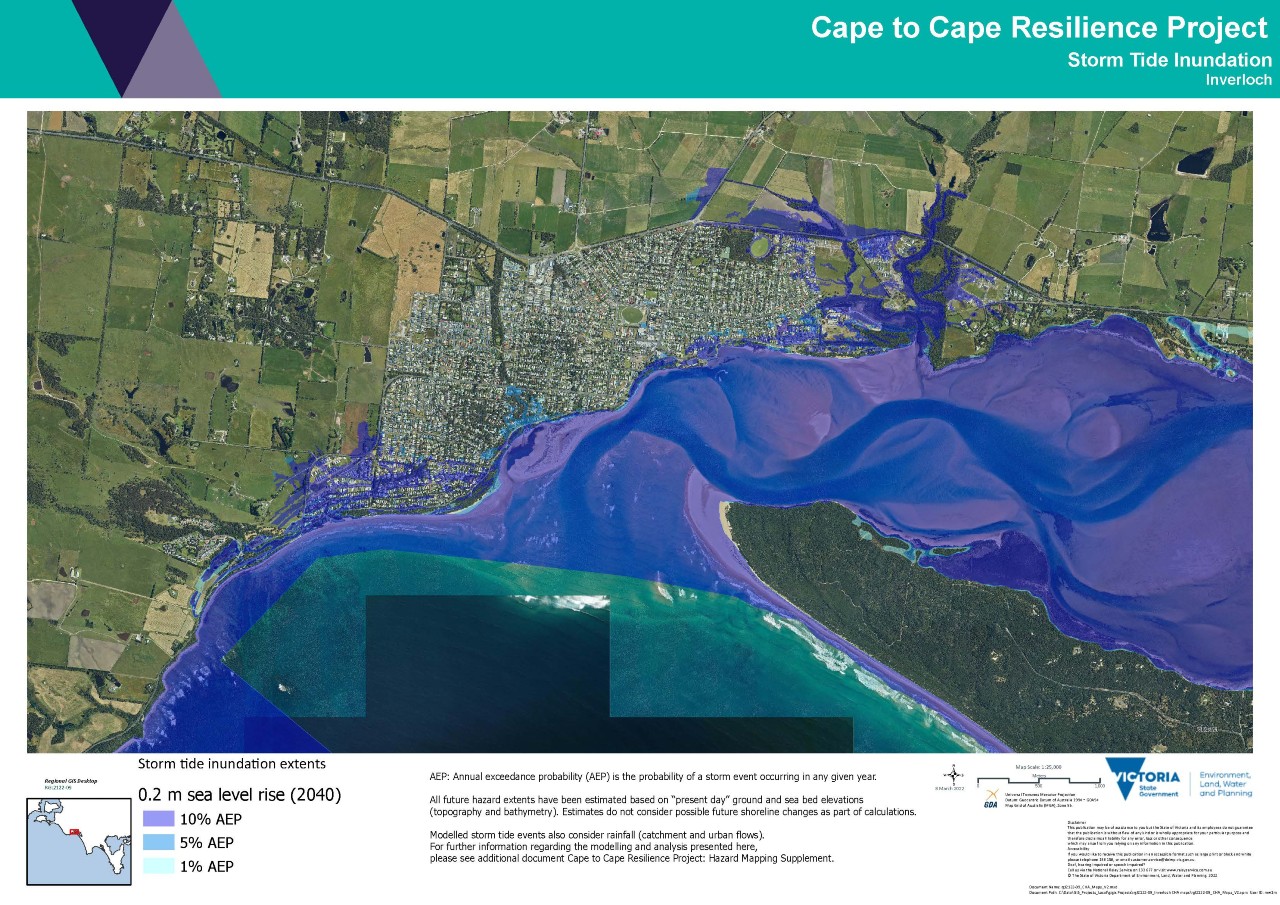
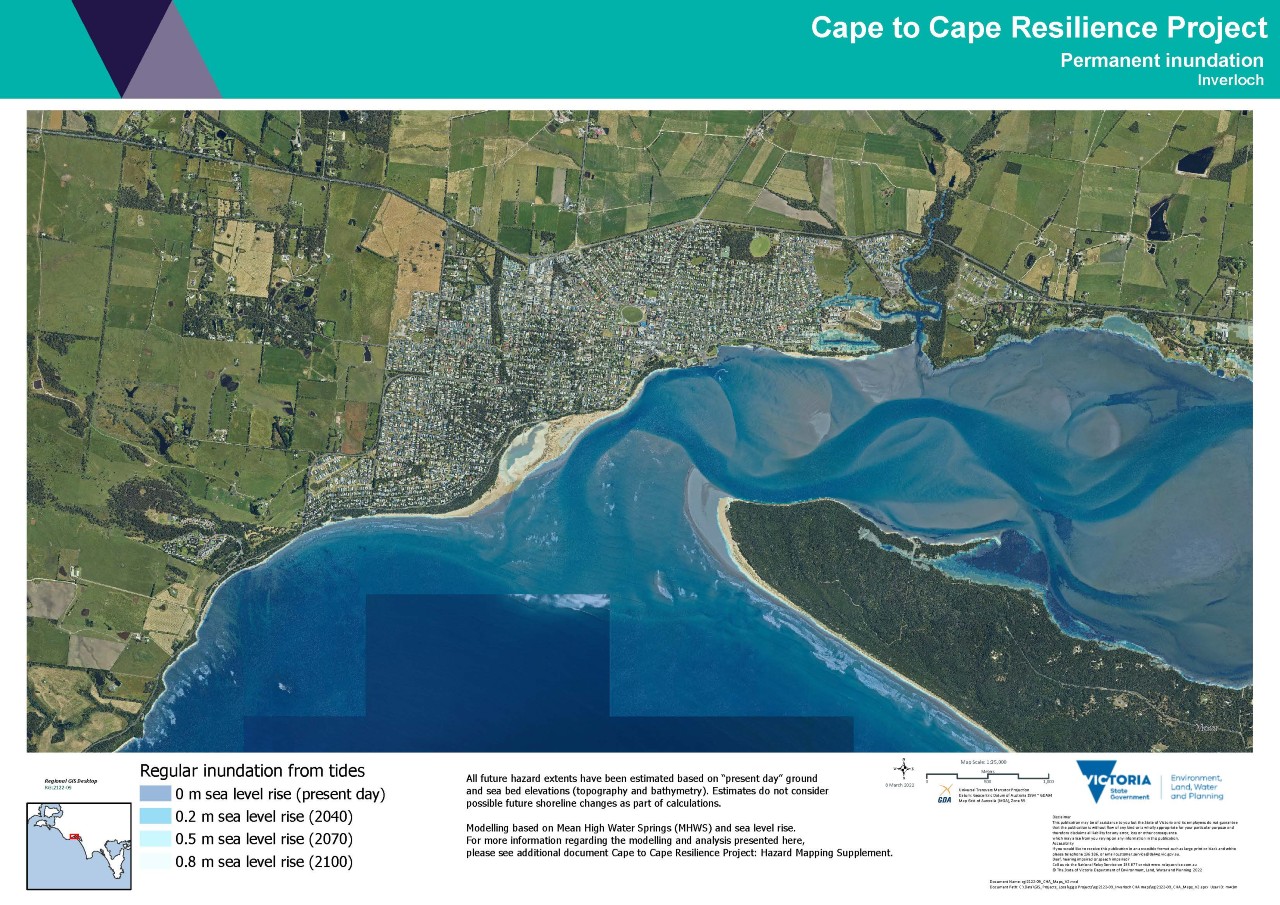
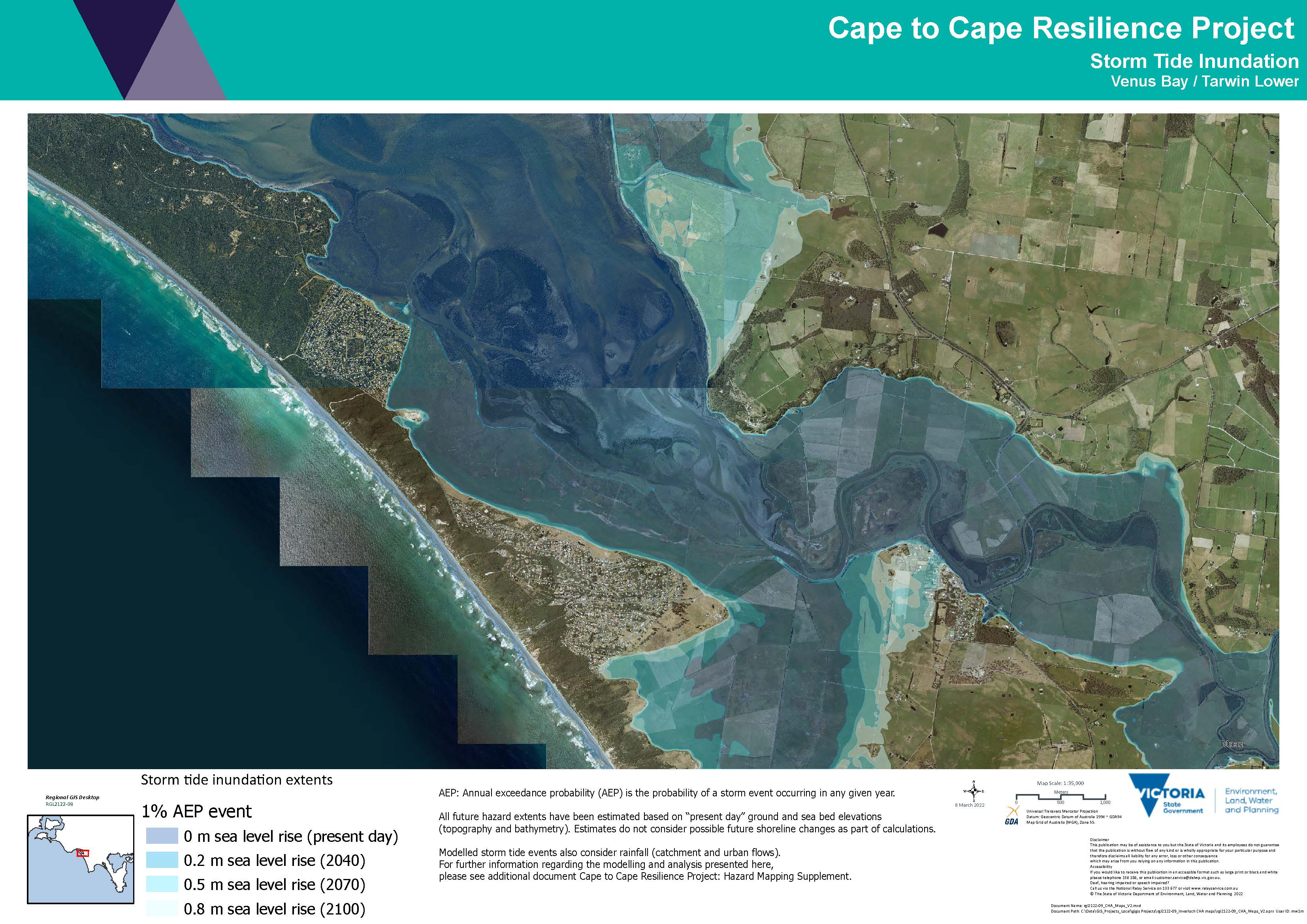
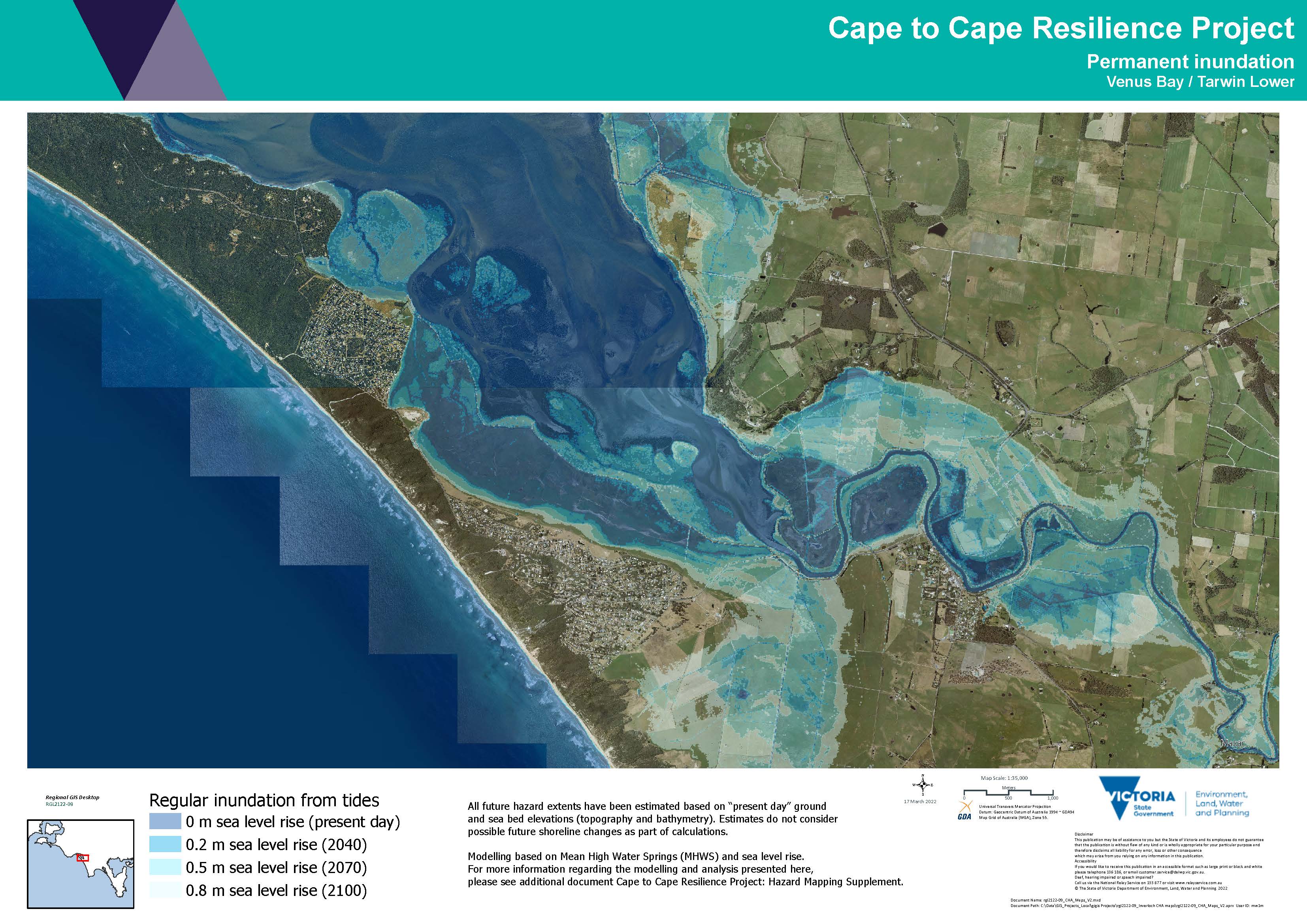
Estimated as 'coastal hazard extents', mapping the CHA modelling results indicates areas along the cape to cape coastlines that may be exposed to inundation (flooding), erosion (sand loss) or sea level rise.
Many maps have been produced by the project team, showing combinations of the different hazard types, storm events and timeframes. This helps to highlight how hazards and exposure varies for each hazard type, storm events, climate conditions and over different timeframes. This spatial understanding informs our understanding of exposure, vulnerability and risk.
You can view the hazard maps below. Be sure to read the hazard map information sheet for more information about the maps and how they help us to plan for the future.
- Hazard Map Information Sheet (Word)/(PDF)
- Cape to Cape Region Erosion Hazard Map_1% AEP (JPG)/(PDF)
- Cape to Cape Region Storm Tide Inundation Hazard Map_1% AEP (JPG)/(PDF)
- Cape to Cape Region Storm Tide Permanent Inundation Hazard Map (JPG)/(PDF)
- Inverloch Erosion Hazard Map_1% AEP (JPG)/(PDF)
- Inverloch Erosion Hazard Map - Bunurong Road and Surf Parade_10% AEP (JPG)/(PDF)
- Inverloch Storm Tide Inundation Hazard Map_1% AEP (JPG)/(PDF)
- Inverloch Storm Tide Inundation Hazard Map AEP Storm (JPG)/(PDF)
- Inverloch Permanent Inundation Map (JPG)/(PDF)
- Venus Bay & Tarwin Lower Storm Tide Inundation Hazard Map_1% AEP (JPG)/(PDF)
- Venus Bay & Tarwin Lower Permanent Inundation Hazard Map (JPG)/(PDF)
The community values study was a key initial study for the cape to cape resilience project. It provides a basis for better understanding the community’s values, priorities and perspectives in the context of adaptation and resilience planning for the coastal areas of the cape to cape region.
Data that informed the community values study came from an extensive engagement process between July and September 2021.
You can find the full details of this engagement in our community values study, or a snapshot of the findings below:
Values and Experiences Survey (Snapshot) October 2021 (Word)/(PDF)
Community Values Study December 2021 (Word)/(PDF)
Community Engagement: Adaptation Survey Outcomes (Snapshot) April 2022 (Word)/(PDF)
Technical and Strategic Assessment
Read the full suite of technical and strategic reports from Stage 1 below:
- Economic Assessment Economic Case Studies
- Adaptation Framework Paper
- Risk and Vulnerability Report
- IRCHA Additional Data and Adaptation Option Review
- IRCHA Summary Report
- IRCHA Data Assimilation & Gap Analysis
- IRCHA Technical Methodology
- IRCHA Coastal Processes Part #1
- IRCHA Coastal Processes Part #2
- IRCHA Coastal Processes Part #3
- IRCHA Coastal Processes Appendix B
- IRCHA Coastal Processes Appendix C
- IRCHA Inundation Hazard Assessment
- IRCHA Coastal Asset Exposure Assessment
- IRCHA Adaptation Action Technical Assessment
We have also created summaries of the key reports to help communicate the key work and findings of the project:
Photo montages
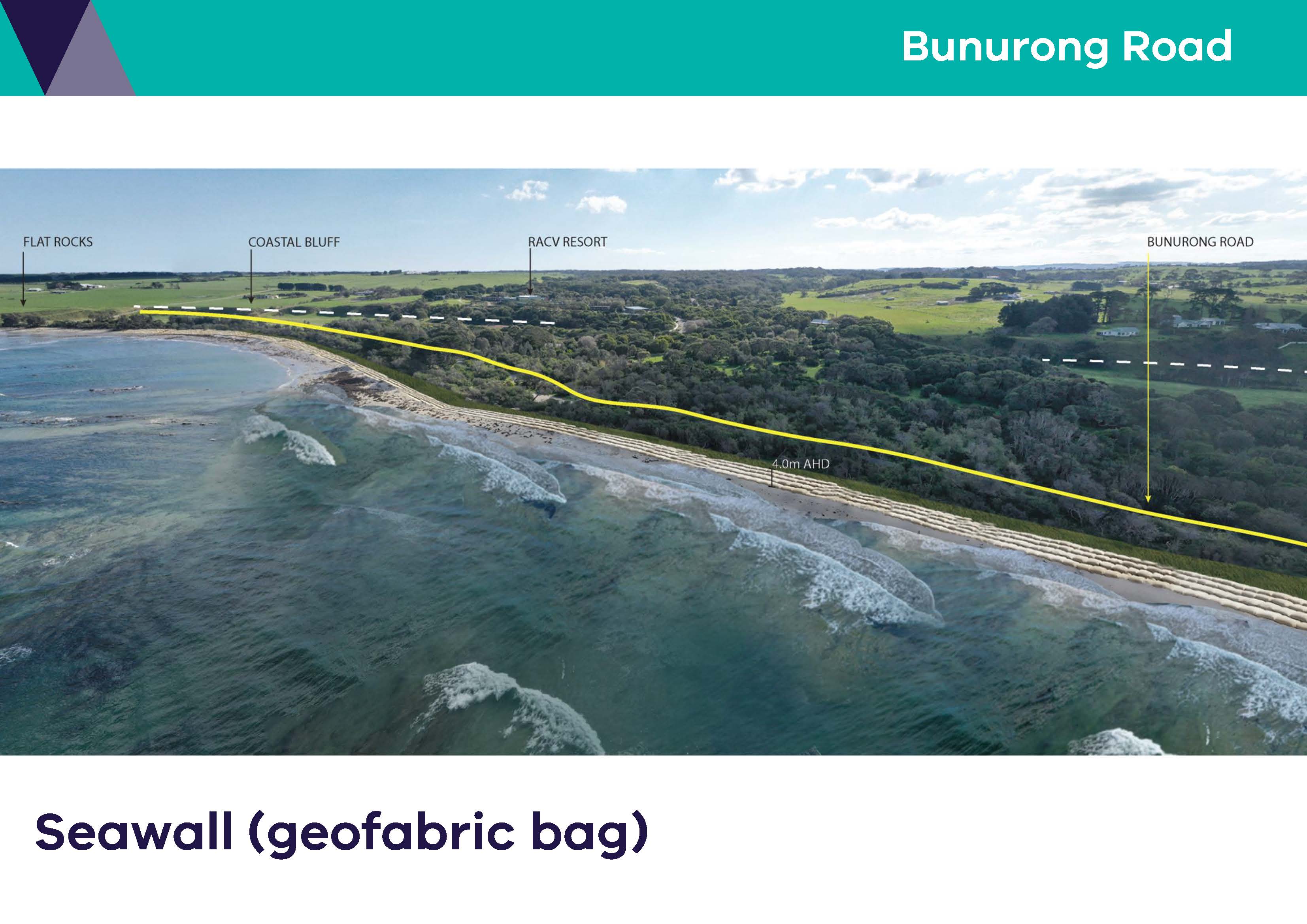
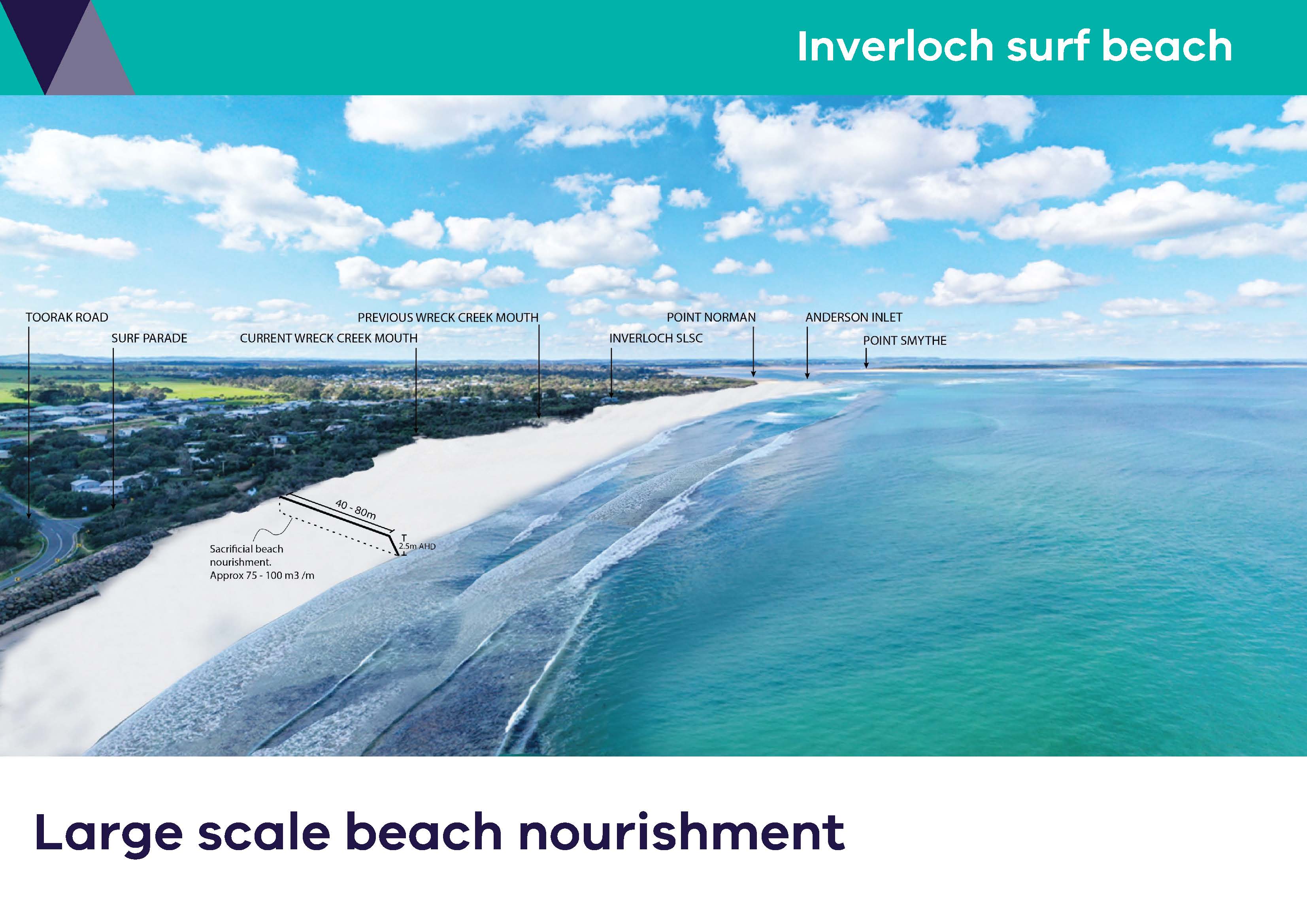
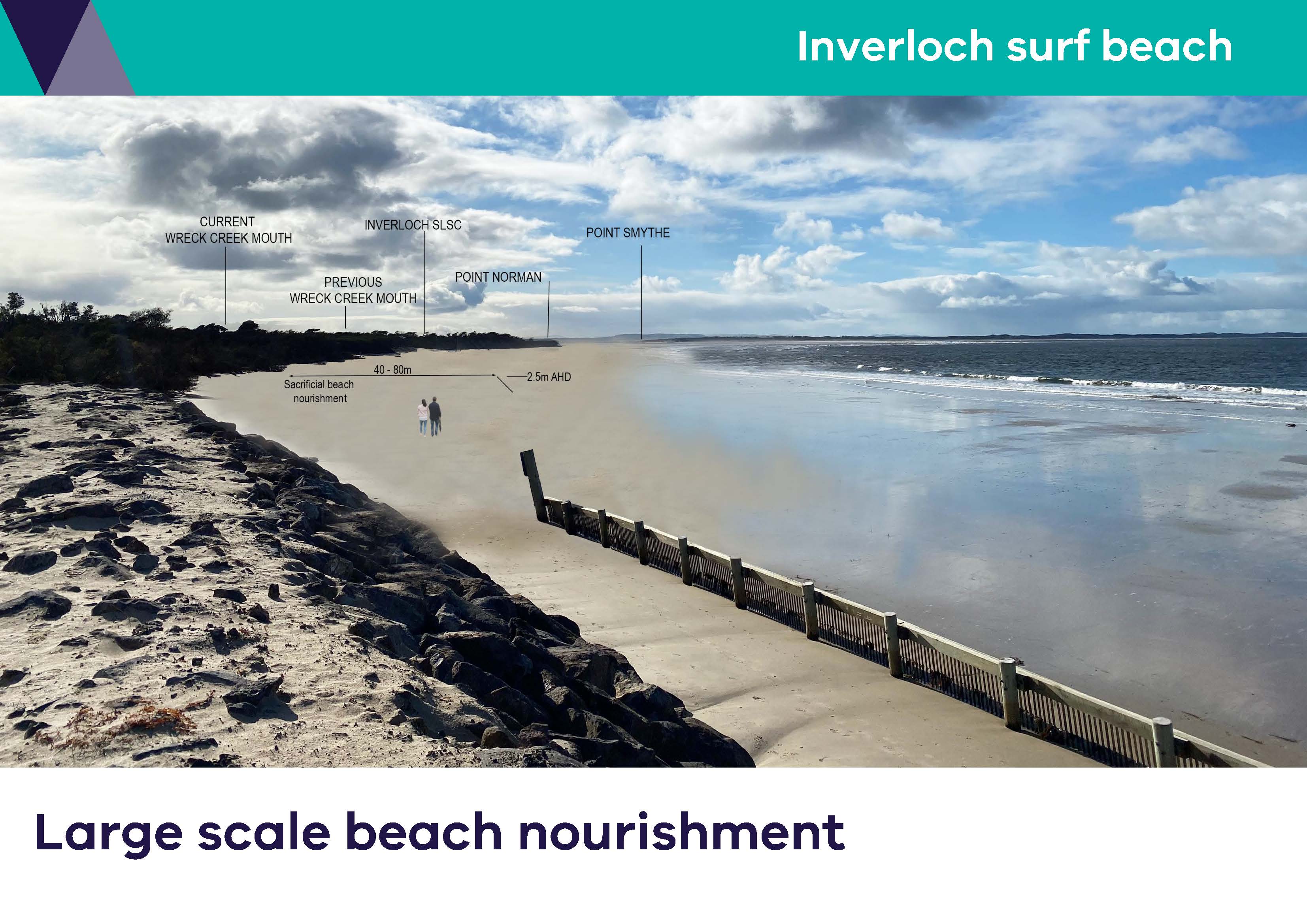
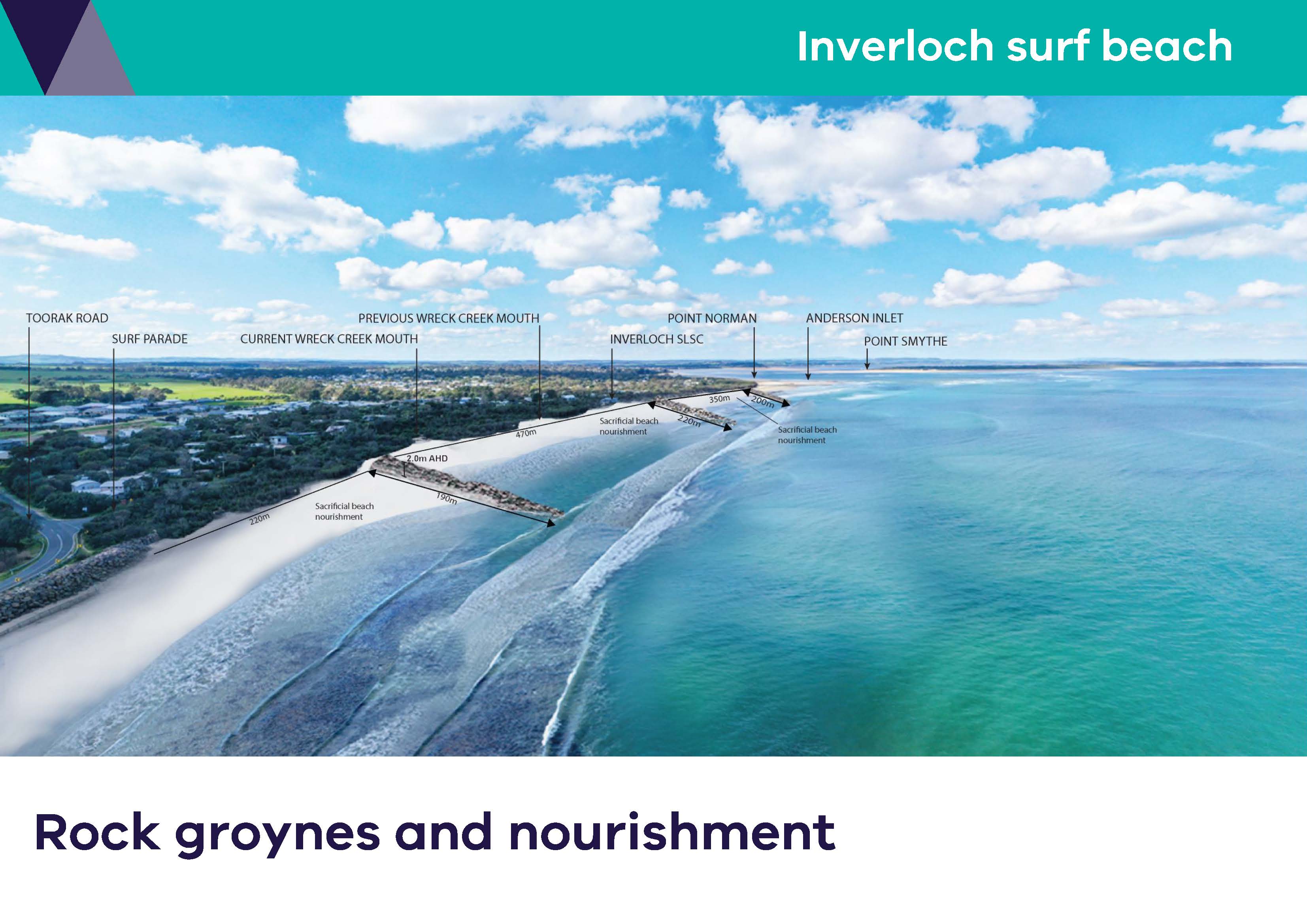
Static visualisations of engineering adaptation options, as identified within the adaptation action technical assessment of the Inverloch region coastal hazard assessment. The below photo montages are based on conceptual designs proposed within the report, presenting visual aesthetic impacts the adaptation options would have on the coastal environment. *Noting that detailed designs have not yet been developed.
Large scale beach nourishment Bunurong Road (JPG)/(PDF)
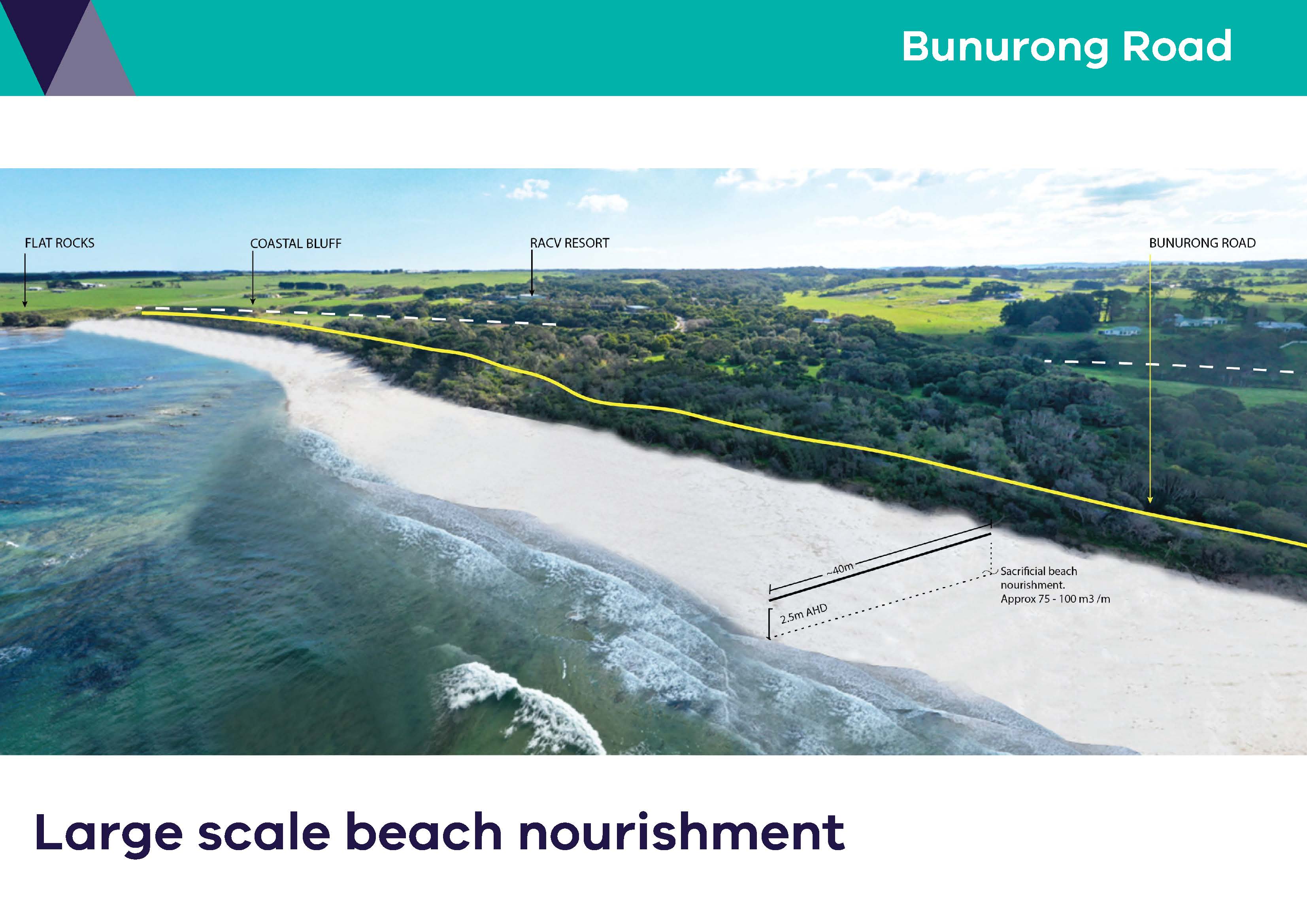
Rock seawall Bunurong Road (JPG)/(PDF)
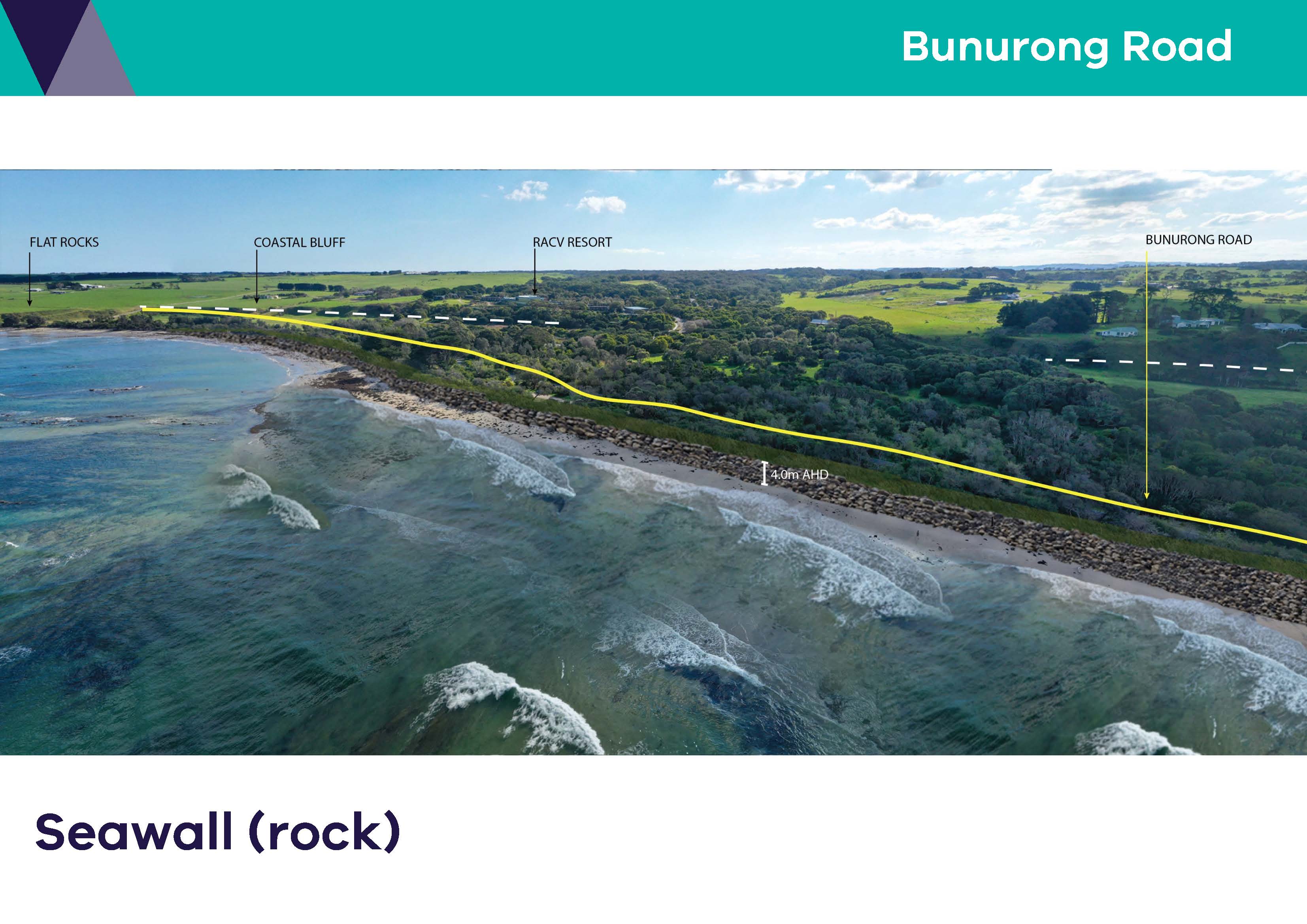
Geotextile sandbag seawall Bunurong Road (JPG)/(PDF)
Large scale beach nourishment Inverloch Surf Beach - aerial view (JPG)/(PDF)
Large scale beach nourishment Inverloch Surf Beach - beach level/oblique view (JPG)/(PDF)
Rock groynes and nourishment Inverloch Surf Beach - aerial view (JPG)/(PDF)
Factsheets
- Adaptation Actions Factsheet (PDF) (Word)
- Coastal Adaptation Factsheet (PDF) (Word)
- Vulnerability and Risk Factsheet (PDF) (Word)
- Coastal Models Factsheet (PDF) (Word)
- Coastal Processes and Hazards Factsheet (PDF) (Word)
- Terminology Factsheet (PDF) (Word)
- The Inverloch Regional and Strategic Partnership Factsheet (PDF) (Word)
- Geomorphology Technical Note (Word)
- Inverloch Dune Reconstruction and Beach Nourishment Project Update #3 September 2025 (Word) (PDF)
- Inverloch Dune Reconstruction Beach Nourishment Project Update #2 July 2025 (PDF, 618.6 KB) | Word (DOCX, 2.7 MB))
- Project Update #11 June 2025 - Community Engagement Findings - Draft Resilience Plan (PDF, 821.4 KB) | (Word) (DOCX, 11.0 MB)
- Inverloch Dune Reconstruction Beach Nourishment Project Update #1 April 2025 (PDF, 1.0 MB) | (Word) (DOCX, 3.2 MB)
- Project Update #10 August 2024 (PDF, 623.1 KB) | (Word) (DOCX, 6.0 MB)
- Project Update #9 July 2023 (PDF, 827.1 KB) | Word (DOCX, 3.5 MB)
- Project Update #8 Engagement Outcomes April 2023 (PDF, 2.2 MB) | Word (DOCX, 4.5 MB)
- Project Update #7 March 2023 (PDF, 823.9 KB) | Word (DOCX, 3.8 MB)
- Project Update #6 October 2022 (PDF, 1.1 MB) | Word (DOCX, 4.8 MB)
- Project Update #5 July 2022 (PDF, 1.0 MB) | (Word) (DOCX, 4.6 MB)
- Project Update #4 April 2022 (PDF, 726.6 KB) | (Word) (DOCX, 4.7 MB)
- Project Update #3 November 2021 (PDF, 525.0 KB) | (Word) (DOCX, 4.0 MB)
- Project Update #2 July 2021 (PDF, 677.4 KB) | (Word) (DOCX, 9.2 MB)
- Project Update #1 May 2021 (PDF, 868.4 KB) | (Word) (DOCX, 12.1 MB)
Frequently Asked Questions
Natural coastal processes like wind, waves, tides and currents work to shift sediment and shape the coastline. When these processes negatively impact on use of the coast, they become coastal hazards. These impacts could be environmental, social, cultural or economic impacts. Coastal hazards include coastal erosion and inundation.
Resilience is the capacity of systems to cope with or 'bounce back' following a hazardous event or disturbance. This includes social, economic and environmental systems. Resilience means responding or reorganising to maintain essential functions, identities and structures, while maintaining the capacity to adapt and transform.
Many agencies share responsibility for managing coastal and marine areas. A regional and strategic partnership (RaSP) provides a way for these agencies to work together in responding to key issues.
Established in August 2020, the Inverloch RaSP was the first partnership formed under the Marine and Coastal Act 2018. It includes ten partners: Traditional Owners the Bunurong Land Council Aboriginal Corporation and nine agencies that manage coastal land, assets, and infrastructure across the Inverloch region.
The Inverloch RaSP has collaborated with the community to address current and future coastal erosion and inundation challenges. This work has included delivering the cape to cape resilience project.
The Inverloch RaSP has representatives from the following agencies and entities:
- Bunurong Land Council Aboriginal Corporation (BLCAC)
- Bass Coast Shire Council (BCSC)
- Department of Energy, Environment and Climate Action (DEECA) (lead agency)
- Department of Transport (DOT)
- Gippsland Ports
- Heritage Victoria
- Parks Victoria (PV)
- South Gippsland Shire Council (SGSC)
- South Gippsland Water (SGW); and
- West Gippsland Catchment Management Authority (WGCMA).
Wreck Creek is a small intermittently closing and opening coastal lagoon located on the western edge of Inverloch. The lagoon is separated from the ocean by a sandy beach berm that forms and breaks down depending on the redistribution of sand and sediments by waves, tides, flood flows and winds.
- For questions related to the management of Wreck Creek, please read the frequently asked questions (DOCX, 23.6 KB).
Go to the CoastKit portal (https://mapshare.vic.gov.au/coastkit/) to explore the hazard layers modelled for the Inverloch Region Coastal Hazard Assessment. Tick the ‘Coastal Hazard Assessment’ box, then ‘Local Study Data Sets’ and ‘Inverloch LCHA 2021’. From there you can select the type of hazard, when it is likely to occur (present day/2040/2070/2100) and move the slider to make the layers more transparent.
Note that inundation layers are based on 2021 topography – coastline changes such as erosion will alter where storm-driven inundation can reach.
In feedback received during the project’s many types of community consultation (various surveys, drop-in sessions, pop-ups, markets, and roundtables), the local community expressed strongly that the natural beach and coastal landscape of Inverloch is what they value the most about Inverloch’s coast. It is a significant recreational and tourism asset, and losing the beach would have wide ranging negative impacts on the town’s amenity, liveability and economy.
A rock revetment, like the one at Cape Paterson-Inverloch Road, will cause erosion in front of it, lowering the beach level. It will not help sand to stay on the beach. This would mean that Inverloch Surf Beach is only useable at low tide. The ends of the wall would behave just like the sandbag seawall, eroding the dune either side during storm events. Extending the wall to make it longer would just move the problem further either side because there is no natural hard headland to tie it into.
This type of large-scale engineering option is not viable for Inverloch for a number of reasons – mainly environmental and economic.
The Gold Coast’s ‘A-line seawall’ is an enormous structure (12.5m wide x 8m high) and extremely expensive to build. Property owners are responsible for the cost of building and maintaining it when they develop the adjacent land. Building one like that at Inverloch would likely cost more than $50 million and would ruin the beach amenity that we’ve been told the community wants to retain.
The beaches of the Gold Coast are almost entirely artificial. They require constant nourishment at significant expense, which is mainly paid for by local businesses.
The Gold Coast’s most recent large scale nourishment was done in 2017 before the Commonwealth Games and cost nearly $20 million. There are hundreds of millions of cubic metres of sand offshore of the east coast of Australia, and it naturally moves north up the coast. The ready sand supply is regularly dredged, and sand is pumped ashore. More sand is pumped north by the sand bypass systems, such as at Tweed Heads, which costs around $10 million annually to operate.
A rock groyne at Point Norman would stop sand moving east into Anderson Inlet. It would not stop sand being eroded and shifting offshore from Inverloch Surf Beach during storm events.
The modelling indicates that a rock groyne would need to be around 300 - 500m long to work properly with the length of the beach and help keep sand in front of the Inverloch Surf Life Saving Club. A deep channel would form on the inlet side of the groyne, causing increased currents and making it unsafe for many water activities. The deep channel would likely undercut the base of the groyne and destabilise it. It would cost around $45 million to build, and beach nourishment would also be required.
Offshore breakwaters would need to be so large that they would always be visible above the water from the beach, even at high tide. They would block the view to the ocean from the beach, significantly impacting beach amenity. They would cost around $40 million to build and would also require beach nourishment. By design, they would change the local wave conditions, meaning they would also impact on the recreational amenity, and the ability to surf in these areas.
There is a range of valuable monitoring activities happening at Inverloch Surf Beach and the surrounding Cape to Cape region. These include measuring sand movement, beach and seabed elevations, wave conditions and water levels, and allow us to track change and how the beach and coastal areas respond to certain weather conditions and storm events. We can also use this information to help validate, refine and improve our coastal models.
DEECA leads a citizen science program which flies drones approximately every 6 weeks to monitor sand movement and shoreline changes on Inverloch Surf Beach. This is part of the Victorian Coastal Monitoring Program.
For over 5 years the South Gippsland Conservation Society has been taking measurements of the location of the dunes and the beach at low tide along the beach from Point Norman to Flat Rocks and reporting on changes.
Gippsland Ports regularly carries out hydrographic surveys of the seabed in Anderson Inlet, the entrance and outside the entrance.
Deakin University has a ‘Vic Waves’ wave buoy offshore in Venus Bay which measures things like wave heights and frequency. For around three months in 2022-3 a second wave buoy was installed nearshore at Surf Beach which helped to validate and calibrate the coastal hazard models.
Transitioning the way land on the coast is zoned and used enables public land to be maintained for access for all Victorians. As sandy beaches and dunes erode due to coastal processes and hazards including sea level rise, what is presently public land will get narrower until in some locations, there is none. This will mean that there is less and less beach for the public to use, and the coastal dunes will no longer provide a natural protective buffer to public and private assets behind them. If we transition land use by relocating assets away from the hazard areas, we can maintain public coastal land into the future.
This problem is affecting many sandy shorelines around the world where people have built assets close to the coast. There are many ideas for how land use transition (or retreat) can be done, and governments worldwide are tackling this in various ways. The Australian and Victorian governments don’t yet have a strategy on how to approach and implement retreat, but some options, like land buy backs/swaps/lease back arrangements, are outlined in the Victoria’s Resilient Coast: adapting to 2100+ Adaptation Actions Compendium and will be explored further during the policy development project.
The Victorian Government has recently been awarded a Commonwealth grant to work with local coastal governments on developing retreat policies to improve climate change adaptation and resilience. So exactly how governments can do retreat on the coast is still be investigated. We can draw from experiences in other sectors - such bushfire hazard zones and critical infrastructure projects, in shaping a retreat approach for at-risk coastal areas.
The government does not control the property market, and the market doesn’t necessarily reflect land use planning and known or expected future hazards. Land use transition is identified in the Cape to Cape Resilience Plan’s adaptation pathways for the period beyond 2040. By 2070, some parts of coast will be so impacted by coastal erosion or inundation (sea level rise) that assets will need to have retreated or they will be damaged too frequently or lost. Hazards will not only impact individual properties, but also key services that support these properties (i.e. water, sewerage, gas, electricity) and reliable and safe access. This will significantly compromise liveability and public safety.
If, how or when property values are impacted by changes to land use (such as development controls or planning scheme overlays) is hard to say. It is up to potential buyers to undertake their due diligence when purchasing property, and many may not be bothered by controls that extend so far into the future. We already see this with properties included in Land Subject to Inundation Overlays, which include many residential areas of Inverloch.
The two local government RaSP partners have committed to working with the Victorian Government to ensure coastal hazards identified through the project are reflected in the planning systems, through a range of mechanisms that are still being explored. This may include planning scheme overlays and building and development controls and rezoning of land. These planning instruments are an important part in helping to avoid poor decisions that have lasting and costly impacts such building in, developing and investing in areas that are increasing at risk into the future.
Triggers are an important tool in adaptation planning. They can be used to indicate when a change in management is required, prompting us to alter what we are doing to mitigate coastal hazard risk. This might be a change in environmental conditions, a shift in levels of risk, changes in community sentiments or risk tolerance or new/extra information available to inform our understanding and decision making.
The detailed adaptation pathways in the plan identify some triggers but triggers for the many different localities in the Cape to cape resilience plan will be further developed by relevant working groups of land and asset managers. Triggers will need to be tailored for different areas across the Cape to Cape region. They also require review and may need to be updated or revised over time.
For the Cape to Cape region, possible triggers include setting erosion distances, such as the coastline recedes to a particular distance from an asset; others may be the number of days/year that an asset like a key access road is inundated or a set number of storms occurring in close succession.
For details about the design, you can review the FAQs from our October 2025 online information session (PDF) (Word) or check out this presentation from Water Technology
For details about how the construction will work, check out the FAQs from our January 2026 online information session.
Part 1 Issued February 2026 (PDF) (Word) and Part 2 Issued March 2026 (PDF) (Word)
Page last updated: 29/07/26